Digital Rebels talk to the Prime Minister
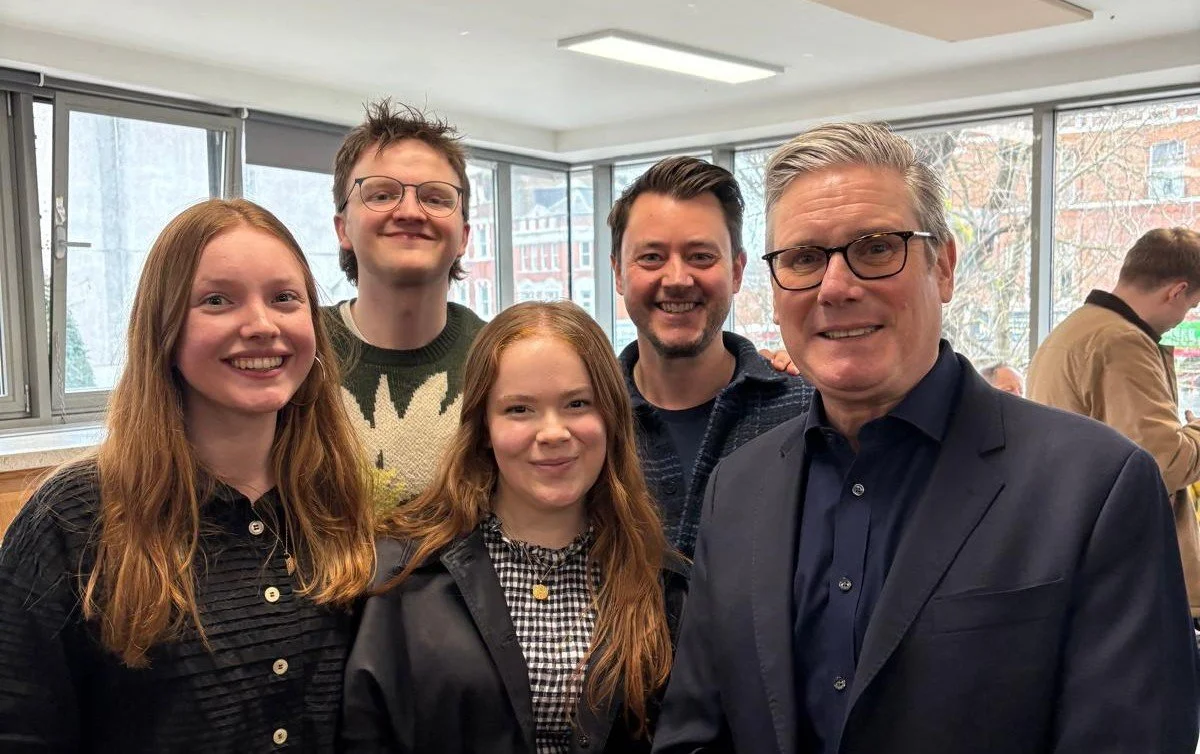
Monday morning was spent talking to the Prime Minister. FlippGen were invited to an event with Keir Starmer, the Secretary of State for Digital, Science, Technology and Innovation Liz Kendall, and London Mayor Sadiq Khan. The event was held at St Mary’s Church, Putney, and was attended by a range of people, from school children to MPs and members of the press. The event formed part of Keir Starmer’s announcement of new government measures aimed at improving digital wellbeing and online safety for young people. Three of FlippGen’s Digital Rebels attended, Paddy Crump, Millie Quinn and Cosima WIltshire, as well as founder Paul Jones.
In his opening speech, the Prime Minister set out plans for immediate action to strengthen protections for young people, including closing loopholes in the Online Safety Act, as well as tightening rules around AI chatbots. After the speech, the Prime Minister took questions from members of the audience, and the press. Digital Rebel Cosima asked how the Government would ensure youth voice was at the heart of the consultation process. The Prime Minister suggested that, as with the National Youth Strategy, young people would be at the heart of the consultation, and genuinely listened to.
Following the speech, Keir Starmer and Liz Kendall joined the Digital Rebels for a coffee and a chat. They spoke about the work that FlippGen was doing, and why, as an organisation, FlippGen is against a blanket social media ban for under-16s. The group explored alternative approaches to the social media ban, such as raising the digital age of consent, and highlighted the For Us manifesto, written by Paddy and Cosima, which proposed alternatives to a blanket ban.
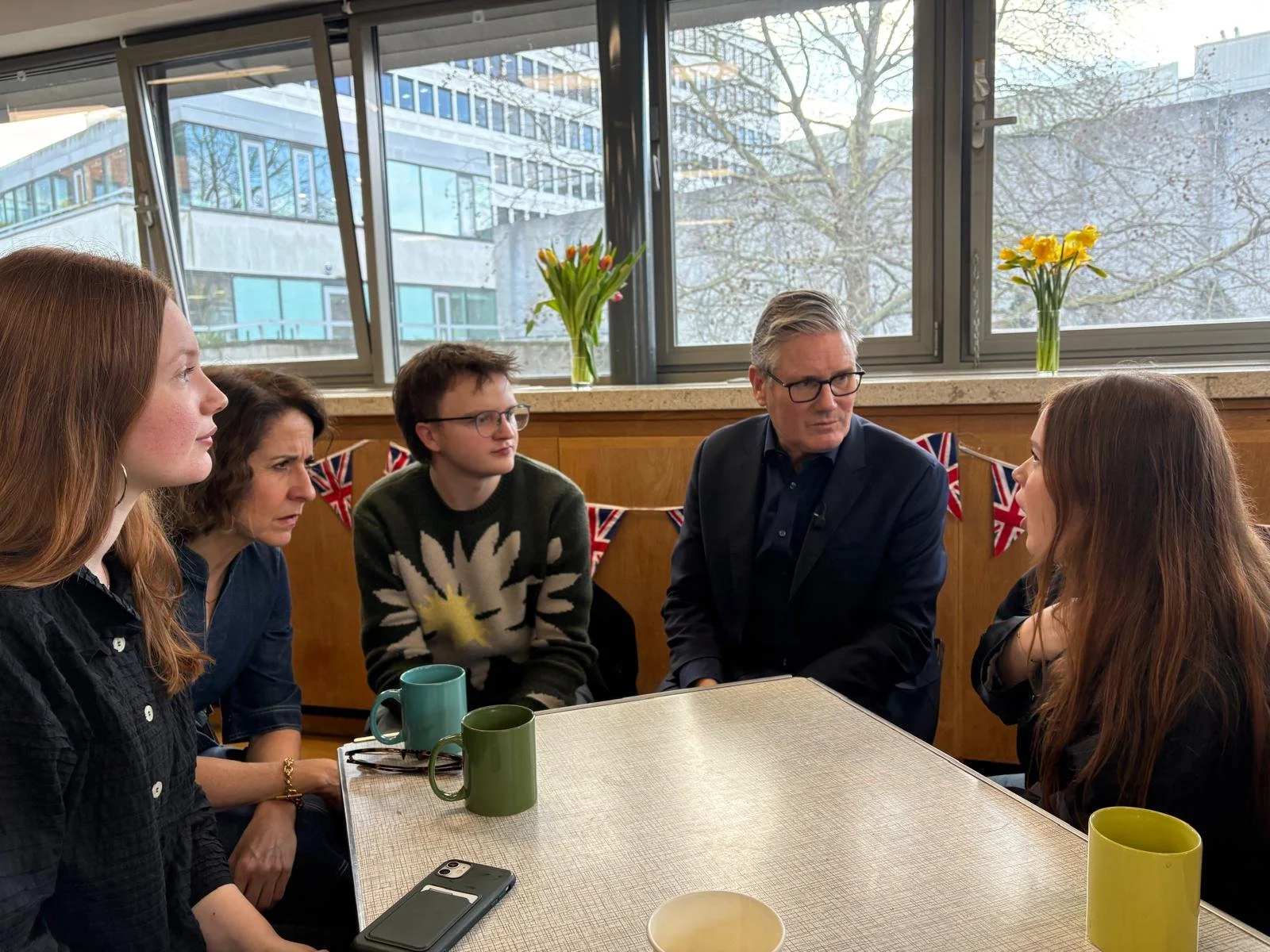
Cosima began by emphasising the importance of adaptive, dynamic digital literacy to complement any Government action that followed the consultation. Drawing on her experience working with the Australian Government on their social media ban, she highlighted some of the flaws that already seem to be emerging. She went on to argue that the issue has become very partisan, and one of the ways to address such an issue is to appoint an independent E-safety commissioner.
Next, Paddy spoke about the potential harmful effects of social media on certain groups of young people, especially those who are members of vulnerable communities. He explained that for many young people, for example those with mental health conditions, social media can provide a lifeline and a key form of connection. He went on to talk about the wider work that FlippGen is doing, and what it means to be a Digital Rebel. Referencing a comment the Prime Minister made as part of his speech, Paddy explained that it was not just parents and teachers who were concerned about the risks of the online world, but young people too. This is why FlippGen exists, to ensure that young people are heard in the debate.
Finally, Millie spoke about tackling violence against women and girls in a digital space. Highlighting the recent crackdown on deepfakes, she pushed the Prime Minister and Liz Kendall on what further actions they would take to protect women and girls online, noting that a social media ban for under-16s alone would not solve this issue. She went on to discuss online radicalisation, arguing that it must be addressed both within the digital spaces and beyond them, including through political and citizenship education.
It was an incredible way to spend a Monday morning. It was a really uplifting event that left everyone feeling hopeful and positive. The message from the Prime Minister and Liz Kendall was clear: they are listening, and they intend to act. A key message was that of urgency. Whatever the outcome of the consultation, attendees were left in no doubt that action should be expected. At FlippGen, we will continue to work hard to ensure that young people’s voices remain front and centre in shaping the future of the digital world.