Unplug to Reconnect: Is 2026 the Year of Going Analogue?
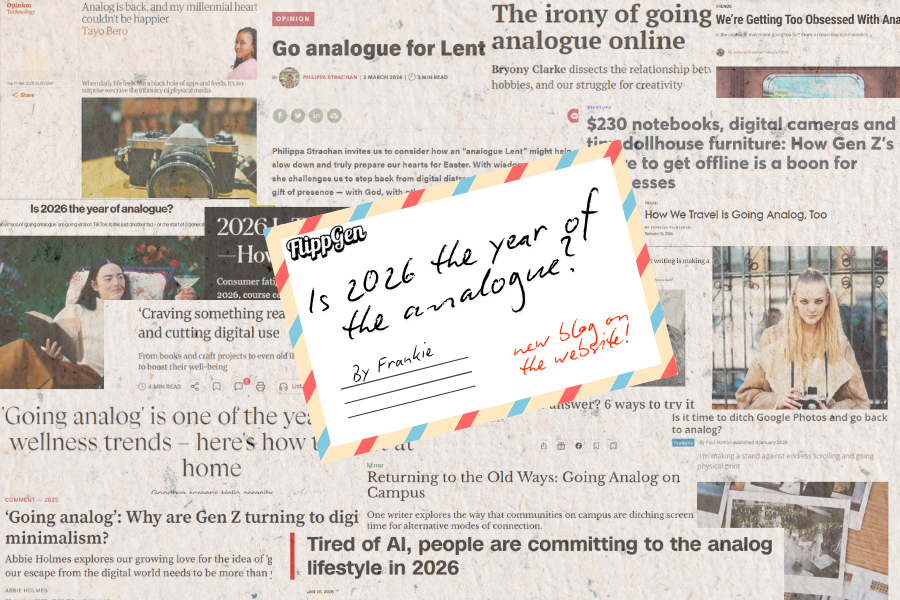
We undeniably live in a world dominated by digital devices and distractions; it’s incredibly difficult to imagine ourselves living offline, given that the average person in the UK spends 7.5 hours on their screens daily. This being said, it doesn't take me long to scroll through Instagram until my feed is flooded with posts and reels promoting #analogueliving for a successful #digitaldetox (and yes, I see the irony of promoting this on social media). Since the new year, ‘going analogue’ has become one of the biggest wellness trends amongst GenZ, with 2026 even being dubbed the ‘Year of Analogue’. Of course, my exposure to this trend will be influenced by my algorithm as I follow many well-being creators. Still, the movement is certainly loud enough for media outlets to pick up on, as there were many articles to read when researching for this blog.
👉 So, I must ask: is ‘going analogue’ simply another trend that will soon dissipate, or is it indicative of young people’s shifting mindsets and approaches to the digital world? Let’s discuss!
What does ‘going analogue’ actually mean?
’Going analogue’. ‘Digital detoxing’. ‘Digital minimalism’. I’ve heard many terms for this movement, but what does it actually mean? Essentially, analogue living seems to be a growing cultural trend within millennial and GenZ spaces. It is described as an intentional lifestyle shift whereby individuals reduce their use of and reliance on digital devices, turning to physical activities and media consumption instead. Going analogue doesn’t mean abandoning technology completely, but rather creating healthier habits and boundaries with it. Instead of letting digital devices and distractions dominate our lives, going analogue helps us to choose when and how we engage with the online world.
👉It’s not anti-tech - it’s pro-choice!
What are the key aspects of going analogue?
Swapping the digital for the physical:
At its core, going analogue means replacing digital tools with their real-life counterparts. I feel like our generation is so used to digital technology existing that we forget humanity lived without smartphones up until the 2000s - we successfully lived fulfilling analogue lives long before relying on AI to write our emails! To live a more analogue life, very simple swaps can be made. This might include using paper planners instead of digital calendars, writing school notes by hand rather than typing them, reading physical books instead of using your Kindle or listening to vinyl records instead of Spotify.
Intentionality:
As Digital Rebel Mariam says in her blog post, “social media apps are designed to '[maximise] social rewards' by combining unexpected recognition, attention and support, which conditions users to check consistently - hence, habitually”. This means we don’t always have a ‘choice’ about when we check our phones and other digital devices - they are cleverly designed to keep us wanting more! However, analogue tools do not trigger these automatic, reward-driven behaviours, but instead require conscious and intentional engagement. If you pick up a book instead of your phone, you’re making a deliberate decision about how to spend your time and attention rather than responding to digital prompts.
Prioritising IRL connections:
It’s easy to communicate with friends using a simple DM, but it means the majority of our interactions happen online rather than face-to-face. Going analogue, on the other hand, helps us to prioritise real-life connections by creating space and time for in-person interactions. By stepping away from our devices, we are able to communicate with people without digital distractions like constant notifications. This allows us to give the people in our presence our full, uninterrupted attention and have meaningful interactions. Furthermore, by going analogue, people are picking up hobbies that allow them to spend time with people in real life. For example, people are going to reading groups together, going on walks or just spending time outside. Shared, screen-free activities help us to feel more grounded and connected with each other and our surroundings!

More and more people are attending reading groups
Why are people embracing going analogue?
Opinions on the internet:
Firstly, going analogue may be such a popular trend due to a general decline in sentiment towards the internet. Ofcom reports that growing numbers of people view the internet as bad for society. In June 2025, around one in five (19%) adults that Ofcom surveyed said that the internet is ‘damaging society’ - a significant increase from Ofcom’s previous data.
Doomscrolling and well-being:
Ofcom also reports that only 29% of adults think that being online is positive for their mental health and well-being! One reason this may be is because of doomscrolling and increased exposure to harmful content. Social media platforms are the most common online spaces that users encounter harmful content - 36% of the time, it is seen just by scrolling through your feed! Seeing such harmful content often makes people feel uncomfortable and upset, so, understandably, people see online spaces as contributors to poor well-being. This is backed by studies like this one showing a link between doomscrolling and increased anxiety, stress, depression, and a sense of hopelessness.
👉Doomscrolling is the habit of obsessively scrolling through and consuming negative, distressing and anxiety-inducing news and social media content.
Finding balance:
Ofcom also reported that one in five younger adults (aged 18-34) does not feel that they have a good balance between their online and offline lives. The analogue trend seems to be a natural evolution of other strategies that Ofcom reports young adults were using to find balance. For example, in the last year:
28% of UK adult internet users (aged 16+) had disabled notifications or used ‘do not disturb’ settings
23% had taken a break from certain social media apps
19% deleted apps due to feeling they were spending too much time on them
22% chose not to take their phones/tablets to bed with them
Tired of AI slop:
The US dictionary Merriam-Webster’s word of the year for 2025 was “slop”, which it defines as “digital content of low quality that is produced, usually in quantity, by means of artificial intelligence” (The Guardian).
I’m not surprised this was the word of the year - It’s absolutely impossible to scroll through Instagram or TikTok without seeing AI-generated content. I’ve literally just forwarded a video of a mouse very skilfully dancing to ‘On the Floor’ to my Dad, which he’ll no doubt find hilarious. Whilst it’s easy for me to tell that this mouse isn’t actually dancing (though that would be VERY impressive), other AI videos are a lot harder to spot. I’m getting bored with my feed being flooded with AI slop - social media should be about seeing what old friends are up to and connecting with people, not avoiding fake videos that aren’t really worth my attention span. An easy way to avoid this? Spending less time on social media!
Reclaiming autonomy:
By going analogue, we are improving our autonomy. We are empowered to make decisions about when to disconnect and write, read or listen. It helps us to slow down and act in the ways we really want to, rather than just reacting to stimuli like social media acts have trained us to do.
👉So, the analogue trend generally seems to be a response to growing dissatisfaction with the online world. Whether it's to avoid harmful content and AI slop, improve lifestyle balance, or regain autonomy, there seem to be many reasons why this trend is so popular.
The benefits of going analogue!
Beyond these motivations, there are clear physical and mental benefits to going analogue - all the more reason to give it a go!
Screens vs nervous systems:
According to Psychology Today, our constant exposure to social media and fatiguing doomscrolling habits wreak havoc on our nervous systems, which leads to us feeling tired, anxious and generally burnt out. Our stress hormone - cortisol - pumps through our bodies to protect us against negative stimuli, but too much cortisol can lead to uncomfortable feelings and anxiety. Slowing down and practising mindfulness helps to combat this, which the analogue trend builds on. By stepping away from our screens, we are free from doomscrolling and constant notifications, which helps our nervous systems find balance.
The positive impact of reduced screen time:
Research shows that there are multiple health benefits to cutting back on your screentime! Health Shield records the following:
We know that exposure to blue light from screens disrupts sleep cycles, meaning avoiding screens before bed can improve your sleep quality.
By avoiding social media and online news outlets, we see fewer stress triggers, reducing our stress and anxiety levels.
By spending less time online, we can focus on intentional, meaningful activities, increasing our productivity and giving us a creative outlet.
Decreasing screen time improves our eye health by reducing eye strain and fatigue.
Spending time offline gives us more time to move and reduces sedentary behaviour, therefore bettering our physical health.
The takeaway!
👉Some key elements of going analogue include swapping the digital for the physical, being more intentional with your time and activities and prioritising IRL connections.
👉Some reasons people are choosing to go analogue are poor online experiences, being tired of AI slop and harmful content, to improve their lifestyle balance and reclaim autonomy.
👉There are mental and physical benefits to going analogue, so swapping out some digital habits for physical ones seems like a no-brainer!
Perhaps we should all try to live outside the algorithm and focus on what is in front of us. But, this shouldn’t just be in 2026 - we should aim to make lifelong changes about how we interact with the digital world. Going analogue doesn’t have to be ‘all or nothing’, so I challenge readers to try one analogue hobby this week instead of doomscrolling … go for a walk with your dog, read a chapter of that book you’ve been meaning to pick up, try colouring in. The possibilities are endless! Thankyou for reading, and remember …
Less scrolling, more living! ✌️