
The Power of One Word
The difference between a ban on social media for U16s, and a ban on “harmful” social media for U16s
What is the government’s proposal?
On 15 June 2026, the UK Government announced a ban on social media for U16s. Although the list of banned platforms has not been confirmed, officials have said that the starting point is the Australian definition. The Australian Government has defined social media as services where the primary purpose is social interaction, which allow the posting of content, and have some type of algorithm. It is clear that the Government is intending to ban “social media” as a category, i.e. a blanket ban on all platforms rather than looking at individual features or functionalities on any given platform.
Despite this blanket ban, the Government does intend to have a separate ban on certain “features and functionalities”. This will include bans on live streaming and stranger pairing and contact (the ability to connect randomly with people the user doesn't know), and will cover platforms not banned, as well as gaming sites. These restrictions will be the default for 16 and 17 year olds. The Government also intends to ban U18s from accessing sexual or romantic AI companions, and that particular feature on general purpose AI chatbots.
Why are people concerned about a “blanket ban”?
There are many concerns surrounding a blanket ban. Primarily, it ignores the fact that not all social media platforms are created equally. There is nothing inherently harmful about “social media”. It is the way that social media is designed, and the harmful content the algorithms push, that is harmful. A blanket ban doesn’t distinguish between “safe” social media platforms, and “harmful” social media platforms. And it does not distinguish between “safe” features, and “harmful” features. Social media start ups that are “safe” will be banned if they fall within the broad definition of “social media”. However, this is not how society and regulation operates in relation to mainstream product safety laws. People often talk of the need to remove “tech exceptionalism”, but this ban is still placing tech platforms in a different category.
Over the past few weeks, people have compared social media to alcohol and cigarettes. But this misses the point. Alcohol and cigarettes are inherently harmful to young people, and cannot be made “safe” for under 16s. Social media platforms could be redesigned to be safe, age appropriate, and promote positive wellbeing. In the same way that there is nothing inherently unsafe about “social media”, there is nothing inherently unsafe about “algorithms”. Everybody comes across algorithms in their everyday lives, without a second thought. And therefore, in just the same way that an algorithm can be designed to push harmful content, an algorithm could be designed to push positive content. However, it was disappointing to see that there was no incentive given in the announcement for social media platforms to re-design their platform.
Another difference between things like cigarettes and alcohol, and social media, is the benefits that social media offers. Social media offers a lifeline for many young people. This ban is taking something away from young people, without putting anything in its place. Many people argue that banning social media is a “precautionary measure”. Social media is causing harm, so the best thing to do is banning it, and then we can work out how to limit the harm. But it is not precautionary if we do not know where young people are going to go. It also isolates vulnerable groups, including LGBTQ+ and the SEND community, who often rely on social media platforms for their support network, and for a community of likeminded people who they can share experiences with.
What does the evidence actually show?
Following Australia’s implementation of the social media ban at the end of 2025, Australia has become a key indicator of the effectiveness of a blanket ban. The early evidence suggests that outright bans are easily circumvented, and therefore have low efficacy.
If platforms are not redesigned to be safer, then:
(i) young people will find a way to access existing social media platforms which are not designed with their safety in mind. In addition, due to the ban and the use of fake ages by young people, they may be treated as ‘adults’, and therefore served content aimed at adults.
(ii) young people will migrate to less regulated platforms where dangers are in fact more likely, and harder to be policed.
This is clear from early research from Australia. According to research by the University of Newcastle, more than 80% of under-16s were still using social media, three months after it came into force. The research concluded that the social media ban had resulted in “limited implementation, incomplete compliance, and substantial circumvention of social media restrictions”. There was also significant uptake in other apps, such as Lemon8, a sister app to TikTok (both of which are owned by ByteDance), which was the most downloaded app on the App store on the day the ban was launched.
Separately, a recent survey from The Mix found that 71% of under-16s feel their voices are not being heard in this debate. At FlippGen, we have written an open letter to the Prime Minister, expressing disappointment about how the consultation and resulting policy announcement was handled, when it comes to young people. Young people did not feel like they had been listened to (despite being the ones affected by the decision), and many young people felt the announcement was aimed at their parents, and not at the people who will be most impacted by the proposed ban.
What has civil society been advocating for?
Due to the way the media has painted a picture of a binary debate, with a ‘pro-ban’ and ‘anti-ban’ camp, many people have come to believe that there is a fundamental split in civil society. However, the debate has been much more focussed on those (largely very active parents from large grassroots organisations) who wanted an outright blanket ban, and many other civil society organisations who were advocating for a ‘safety by design’ approach.
In simple terms, much of civil society focused on “harmful” social media platforms. As such, a great number of civil society organisations worked together on advocating for safety be design i.e. targeting the ‘harmful’ features and functionalities of social media platforms, and formed coalitions at various times.
First, Lord Nash, who originally proposed a social media ban in the House of Lords, drafted a Joint Statement of Principles for Furthering the Protection of Children Online (not the catchiest title) which put forward a set of measures to reduce preventable harm:
Platforms and digital services that cannot meet minimum safety standards should not be allowed access to children.
Addictive and persuasive design features (such as infinite scrolling and autoplay) should be addressed.
Risky features (such as stranger contact, location tracking, and risky AI features) should also be addressed.
Gaming platforms and emerging AI technologies must be covered alongside social media.
Platforms should remain responsible for children’s safety even where young people try to circumnavigate or workaround restrictions.
Children’s voices should inform future safeguards and digital policies.
Stronger public messaging should help families understand online risks.
Digital literacy should support children online as they grow older.
Independent oversight should monitor how platforms respond to risks.
Importantly, these principles recognised that messaging should not refer to ‘banning’ children from platforms, but instead focus on safety as a baseline condition for services to be able to access children and young people as users. In simple terms, platforms should have to prove they are safe, before they are allowed access to under-16s. The principles garnered widespread support, including from, FlippGen, Health Professionals for Safer Screens, Mumsnet, Parentkind, NSPCC, 5 Rights Foundation, Professor Sonia Livingstone OBE, many bereaved parents, and even Lord Nash himself.
Then came an unlikely coalition (and joint letter to the PM) between Smartphone Free Childhood and Molly Rose Foundation (and FlippGen, NSPCC, People vs Big Tech etc). Similar to the Joint Principles, it did not advocate for a blanket ban, instead focussing on prohibiting access to social media platforms that did not meet strict safety standards, including on addictive design and risky features. It also expressly recognised: “We believe a binary debate between banning children from social media or not can oversimplify what is a complex issue. Instead, platforms’ continued ability to offer accounts and services to children should be made conditional on their ability to demonstrate that they are safe.”
What do the experts say?
As young people, our expertise comes from experience, not academia. Therefore, we can’t do justice to the many scientists who have commented on the announcement of the ban. However, there are few who suggest that the advantages of a ban outweigh the disadvantages, with the majority raising significant concerns.
When reviewing the analysis of scientists following the announcement, the following key themes emerge:
Blanket bans and blanket age-gating remove agency from young people without incentivising platforms to make their design safer. Instead of the current focus on “restricting access”, there should be a move towards making platforms inherently safer.
Restricting harmful features and functionalities (such as addictive design features), rather than young people, would target the harms, whilst preserving the benefits of social media for young people, and protecting their digital rights.
Whilst evidence suggests some forms of social media can be harmful for young people, there is also evidence to suggest that a simple blanket ban will not reduce harm at a population level.
A ban creates a false sense of security, and makes young people less likely to reach out when they encounter harm online, ultimately widening the gap between young people and their trusted adult, and the policy makers.
What do young people want?
When we asked young people what they wanted, they were clear. They didn’t want a blanket ban; they wanted platforms that were safe by default. They believed it should be the responsibility of platforms to be safe, rather than young people’s responsibility to avoid unsafe platforms. As part of the Growing Up in an Online World consultation, FlippGen convened a youth-led town hall, bringing together young people aged 9-21. Instead of calling for a ban, the attendees called for limitations on certain addictive features, and talked about a desire for more autonomy over their own feeds.
For young people, this is not about a desire for continuity of the current status quo. The opposite is true. Young people acknowledged that social media was working against them, not with them. Without fail, every young person called for changes to social media. However, young people expressed deep concern about the prospect of a blanket ban. They frequently talked about the community that social media can offer, often referencing a decline in physical third spaces.
What are we calling for?
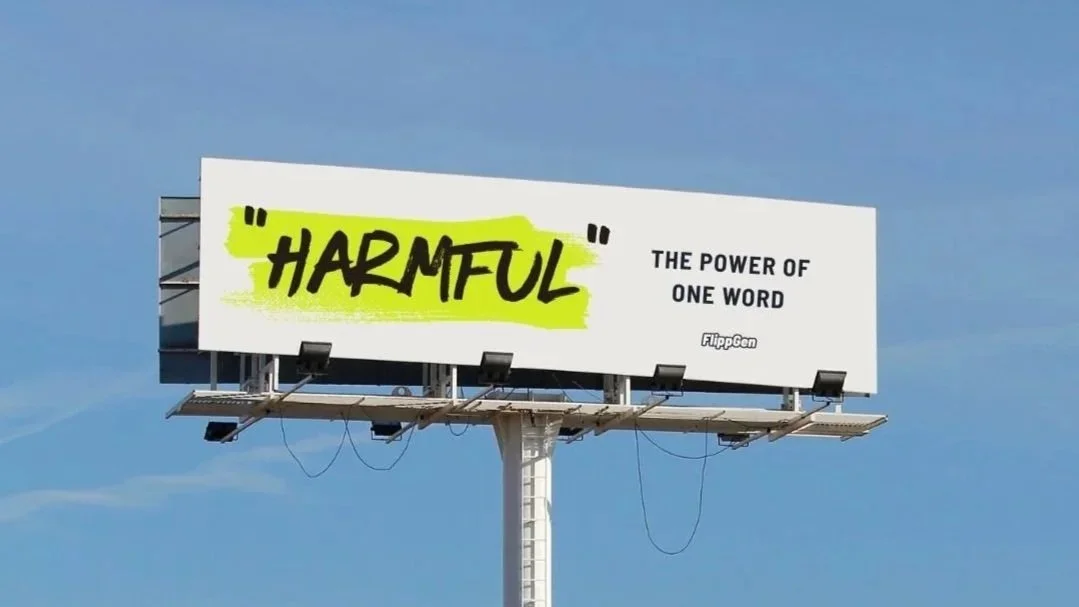
At FlippGen, we are urging the Government to reconsider the wording of the proposed social media ban. We believe the word “harmful” should be inserted. Thus, “harmful” social media would be banned, instead of all social media. This is not about giving social media companies a free-ride, this is about incentivising them to do better.
Current platforms that are ‘unsafe’ will still be banned, until they change their design, and can prove that they are safe and age appropriate. This is the best of all worlds, young people can keep the ‘good’ whilst being protected from the ‘bad’.
Instead of blanket bans, we believe that:
Current online safety regulation should be strengthened to prohibit addictive design features, and risky features for U16s
Protections should be extended beyond the age of 16, setting the same features as defaults
Young people should be properly consulted with.
So how have we ended up here?
Following the announcement of a blanket ban, the Government has relied heavily on the assertion that “9 out of 10” parents support the ban. This is based on the fact that 9 out of 10 of those parents who filled in consultation expressed support for a ban. This entirely ignores sampling bias of those parents who had the awareness of the consultation in the first place, and the time and energy to respond to a consultation document which, at best, can be described as laborious. Out of the roughly 15 million parents in the UK, 54,000 (or 0.36% of total parents) completed the survey.
It is also fair to say that the consultation questions were not framed as a nuanced argument. Whilst it is understandable that 90% of parents would favour a ban over the status quo, there was not a simple choice to “make social media safer”. Many parents, if faced with the choice of allowing their children to access a safely designed and age appropriate social media platform vs simply taking all forms of social media platform away, would have chosen the former. According to research by the Online Safety Act Network, 84% of UK adults believe that requiring companies to prove their products are designed and tested to be safe before use would make social media safer for everyone.
However, the focus on a battle between “pro-ban” vs “anti-ban” entirely misses the point. The vast majority of civil society, the experts, young people themselves were all on the same page advocating for a ban on “harmful” social media like the Canadian model.
Our call to the Government
So, this is our call to the Government. Seriously consider adding the word ‘harmful’ to the proposed policy. It may seem a small change, but it will fundamentally change the policy. Young people want it, civil society organisations want it, the experts support it, as does the evidence… even the G7 summit leaders (including the US) managed to agree that balancing child rights and a safety by design approach was the correct one. Be bold, and challenge those Big tech companies to do better…
The FlippGen Digital Rebels
