From Screens to Real Life: A Story About Connection
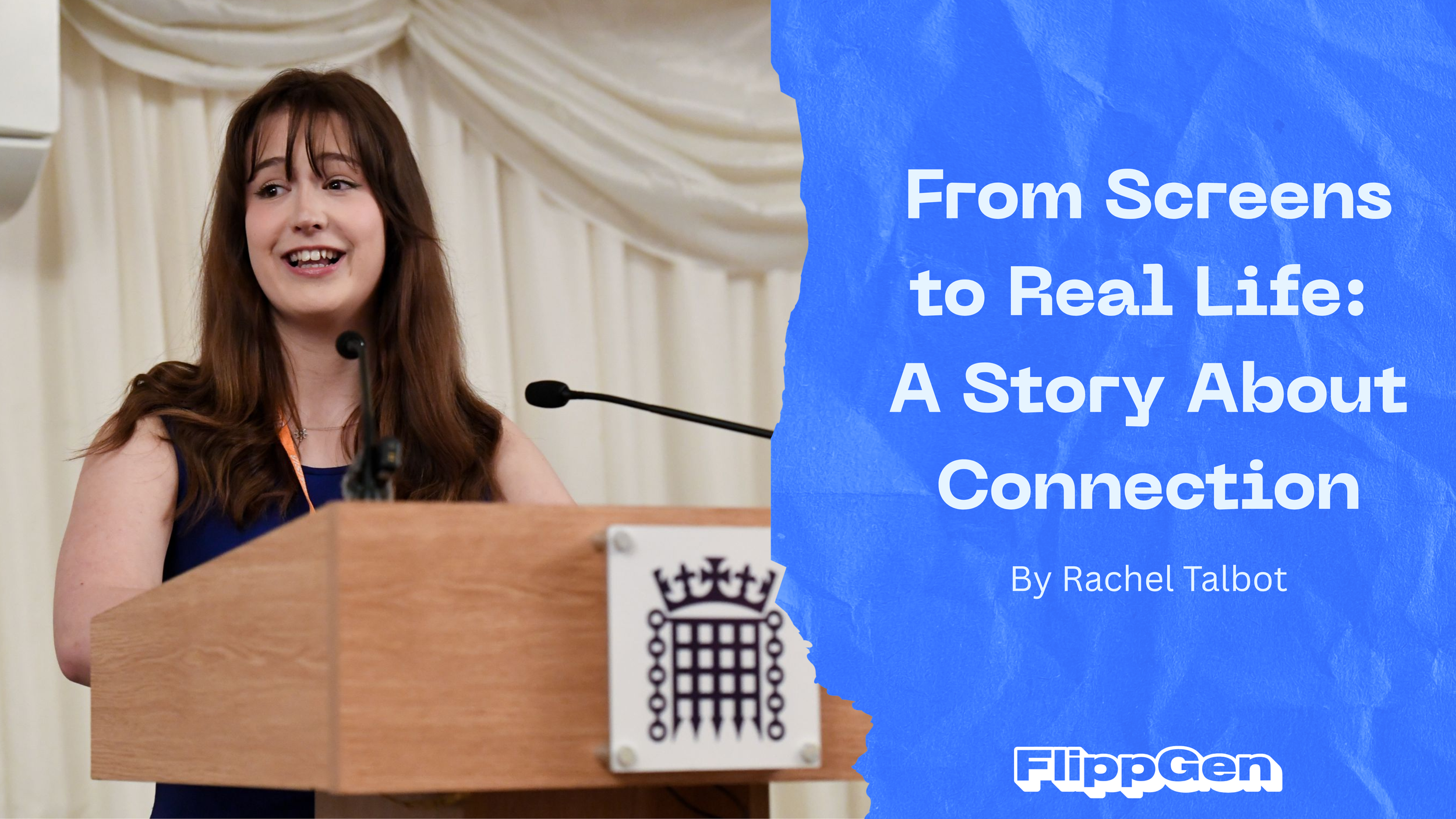
Hi Everyone! I’m Rachel! I’ve been involved in the Online Safety space for around 8 years now, and it’s something I’m incredibly passionate about. I am a very new digital rebel and got involved after the Molly Rose Foundation gave me the fantastic opportunity to speak about my experiences online and my stance on the under-16s social media ban at an event of theirs in February, and I would like to share what I spoke about.
I’ve spent a lot of time speaking about what it was like for me online growing up, and unfortunately, many of my personal anecdotes are negative. While those are important and they highlight very real issues of the online world, they also do not tell the whole story. I’d like to tell you about one of my best friends. We met when I was 13, and she was 15, but it was 2020, and we had just joined a national volunteer board together, so everything was online. We spoke in meetings, and we got along well, but we were never super close because we lived very far apart from each other and only really had online meetings once a month.
The first time we ever met in person was in Liverpool for the Labour Party Conference two years later. We went for dinner the night before, finally got the chance to talk properly, and exchanged socials. From then on, we kept in touch, brought closer by the fact that social media allowed us to see updates from each other's lives, but our contact was on and off. It could be argued that had we exchanged numbers, we could’ve kept in touch just as easily but we hadn’t spoken properly in months, and what brought us back together was that she posted an Instagram story from her brand new student accommodation 20 minutes away from where I would be moving into a week later. This, I think, is what social media is meant for: building community and having a string that tethers you to people, allowing for that door to always be open. Young people should be able to enjoy this sense of community in a safe environment, as the benefits can be truly wonderful, which is one of the reasons I am so passionate about making the online world a safer space for everyone.
Now I think it’s important that I touch on the big online safety question of the year: Should we ban under-16s from social media? First, I think it is important that we do not split the online safety movement into “pro-ban and anti-ban”; both arguments come from a desire to protect young people, and we will achieve far more by working together than by arguing about how to go about it
That being said, I do not believe that bans are the blanket answer they are being promoted as. Banning young people from online spaces will not stop them from accessing them; instead, they will turn to spaces that are not as regulated and may feel unable to come forward about issues that they face online because, by being there, they have been told that they are doing something ‘wrong’. In this way, it can be seen that legislation that removes young people from online spaces does not solve the problem but instead washes the government’s hands of any responsibility to discuss online safety further because, theoretically, they have done their jobs.
At university, I study politics and childhood and youth, and throughout the start of my second year in Childhood & Youth, our main focus has been on children’s rights, particularly around participation. Article 12 of the UN Convention on Rights of a Child (UNCRC) provides young people with the right to have their voices heard, and one of the biggest ways they can access this right in current times is by having the freedom to express themselves on social media. It is the one place where they do not have to be asked or invited by adults to have a seat at the table, and taking these platforms away from them will, in turn, make it harder for them to engage with the world around them and be taken seriously.
On top of this, many young people have built their communities online, and social media platforms are often how they contact the support systems that they have built for themselves that they otherwise might not have. Is it ideal for a young person's support network to be entirely online? No, it isn’t, but it is important that we focus on giving them the tools to find and access community in the real world rather than ripping them from the only one they have.
What we have to remember is that we are discussing a ban that will not affect a single person in this room. It is easy to say that young people should be made to give up social media, but how many of our politicians and policymakers would be willing to go cold turkey for even a month? It’s hard, I did it growing up, and I tried to do it again over Christmas, but it was so incredibly isolating. This is something that, if it were to happen, needs to come from young people themselves because they are the only ones who are truly knowledgeable about the issues they face, not made in a room full of adults, some of whom may not even know that different types of messages have different colours on Snapchat.
Taking a space away from young people that is meant to be connecting, creative, and fun due to concerns over safety and what harmful content and interaction can do to their mental health, blames them for the failures of tech companies and, in some cases, the government to regulate these spaces in a way that makes them easier for everyone to enjoy. My stance on this will always be clear. Online Safety is not a burden meant for the shoulders of young people, and they should not be the ones expected to answer for this when it is the tech companies who profit from the harm that the online world can cause. Taking resources away from them punishes them for a problem they never created.